Does Jewelry Attract Sharks?
Short answer: yes — shiny jewelry can attract a shark’s attention in the water, though not for the reasons most people imagine. Here’s what’s actually going on, and when it’s worth taking your rings and chains off before you swim.
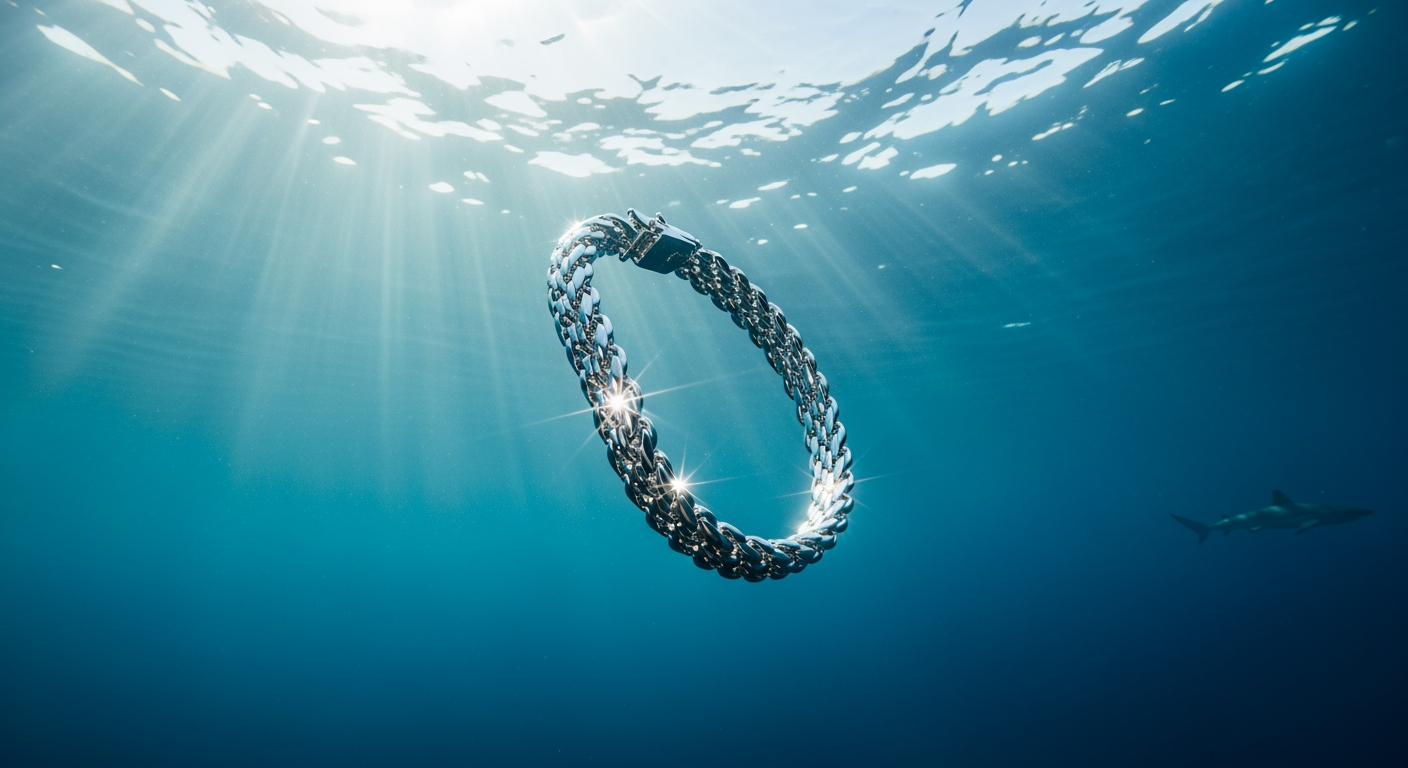
Sharks don’t want your treasure — they want fish
Sharks aren’t drawn to gold or silver because they like treasure. They’re drawn to shiny, flashing jewelry because, underwater, a glint of reflected light can look a lot like the flash of a fish’s scales — and fish are food. To a shark relying on vision in the final moments of a hunt, a sparkling bracelet, ring or watch can read as a darting baitfish.
Why shiny jewelry can catch a shark’s eye
Three things combine to make jewelry noticeable to a shark. First, flash: polished metal reflects light in bright, sudden glints, the same visual cue a fish’s scales give off. Second, contrast: a shiny piece stands out sharply against your skin or a wetsuit, and sharks are tuned to notice contrast. Third, movement: your hands and wrists move constantly, so a bracelet or watch doesn’t flash once — it flashes again and again, exactly like something alive.
The electricity question
Sharks also sense the world through electroreception — special organs called the ampullae of Lorenzini that detect tiny electrical fields given off by living things. Different metals sitting in salt water can create very weak electrical currents, and some divers suspect this can register on a shark’s finely tuned senses. It’s a minor, debated effect next to the simple problem of flash and contrast, but it’s one more reason experienced divers keep metal to a minimum.
Should you take your jewelry off to swim?
For a dip at a calm, clear beach, everyday jewelry is unlikely to matter. The advice tightens in three situations: when the water is murky (sharks rely more on their other senses and are more likely to come in for a closer look), when you’re somewhere sharks are known to feed, or when you’re diving or snorkeling for long stretches. In those cases, the common-sense move dive instructors give is simple: leave shiny, flashy jewelry on dry land. A dark, matte band is far less of an issue than a bright, mirror-finish piece.
What else attracts sharks?
Jewelry is a small factor next to these better-known ones.
Flash & contrast
Reflective jewelry and bright, high-contrast colors stand out underwater — divers half-jokingly call bright yellow “yum yum yellow.”
Splashing & erratic movement
Thrashing and irregular splashing mimics a struggling fish, which is exactly what a hunting shark is listening for.
Blood & bodily fluids
Sharks have an extraordinary sense of smell and can detect blood and other fluids at very low concentrations.
Bait & fishing activity
Chum, bait and speared catch are powerful draws — which is why swimming near fishing or spearfishing is discouraged.
The bottom line
Yes, jewelry — specifically shiny, reflective jewelry — can attract a shark’s attention by mimicking the flash of fish scales, and possibly by giving off faint electrical signals. It’s rarely a problem in calm, clear water, but if you’re swimming in murky water or known shark territory, taking off your shiniest pieces is a cheap, easy precaution. Wearing your favorite shark pendant around town, on the other hand, is completely safe — and arguably the only shark-and-jewelry combination you should actively seek out.
Speaking of which — if you love sharks, see our guide to the best shark jewelry, from tooth necklaces to rings and bold statement pieces.