25 Amazing Shark Facts
Sharks are older than trees, sense the world through electricity, and range from palm-sized to bus-sized. Here are 25 fun, surprising and slightly weird shark facts — all true.
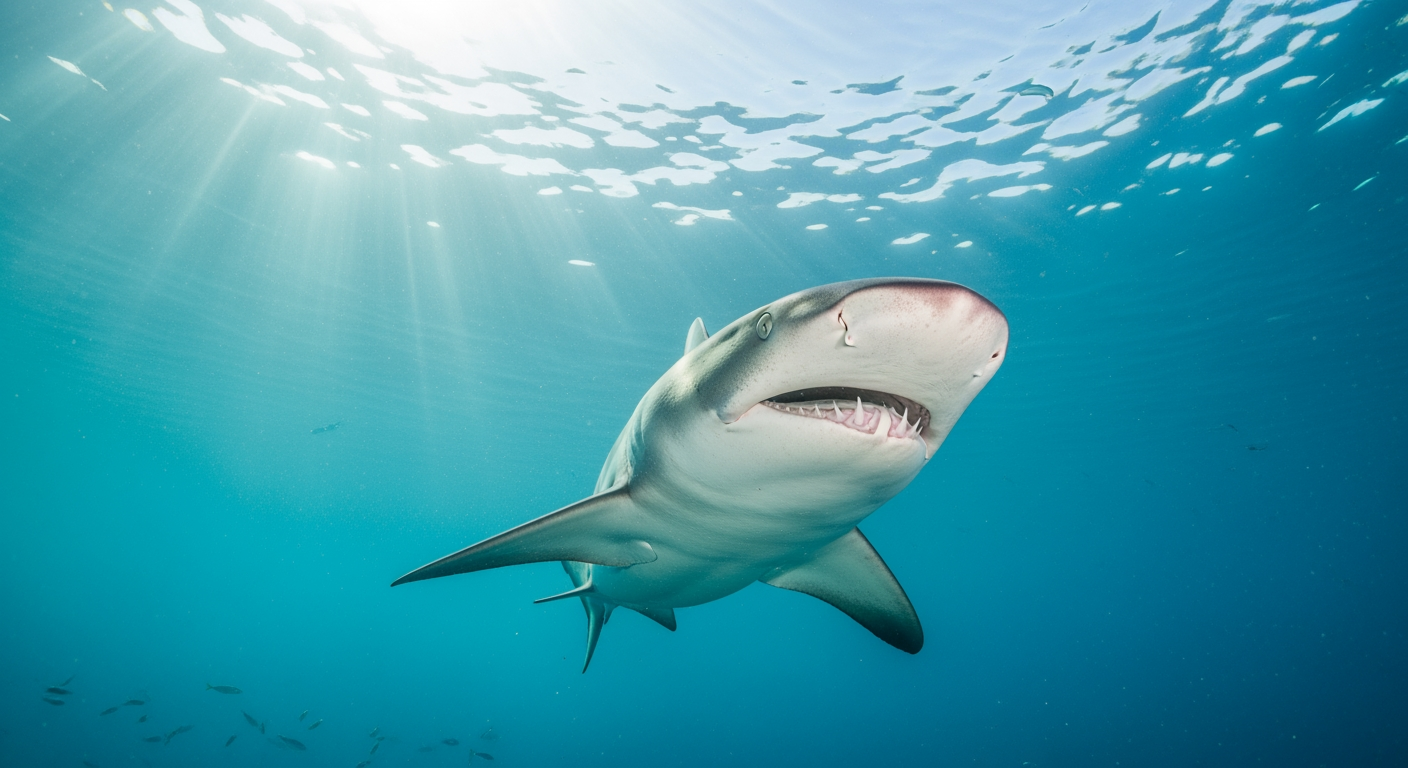
Older than almost everything
1. They’re older than trees. Sharks have existed for more than 400 million years — they were already ancient when the first dinosaurs appeared, and they’ve survived all five mass extinctions.
2. They have no bones. A shark’s entire skeleton is made of cartilage, which is lighter and more flexible than bone and helps them stay buoyant.
3. Megalodon really existed. The largest shark ever, Otodus megalodon, may have reached 15 metres or more — roughly three times the length of a great white — before going extinct around 3.6 million years ago.
4. The Greenland shark may live for centuries. It’s the longest-lived vertebrate known to science, with some individuals estimated to be over 300 years old.
Engineering marvels
5. Their skin is covered in “teeth.” Sharkskin is made of tiny tooth-like scales called dermal denticles, which reduce drag and let them swim almost silently.
6. They never run out of teeth. Sharks grow teeth in rows and replace them constantly — some species go through tens of thousands in a lifetime.
7. Some must swim to breathe. Certain sharks rely on “ram ventilation,” forcing water over their gills by moving forward, so they can never fully stop.
8. Their livers are huge. A shark’s oil-rich liver can make up a quarter of its body weight and acts like a built-in buoyancy aid.
How sharks read the ocean
9. They can sense electricity. Special organs called the ampullae of Lorenzini detect the tiny electrical fields given off by living animals — even a heartbeat.
10. Their sense of smell is extraordinary. Sharks can detect certain scents in the water at very low concentrations, and steer toward them from a distance.
11. They have a “lateral line.” A row of sensors along the body lets sharks feel vibrations and movement in the water around them.
12. Some can see in near-darkness. A mirror-like layer behind the retina boosts their vision in low light, helping deep and night hunters.
From palm-sized to enormous
13. The whale shark is the biggest fish alive. It can grow longer than a bus — yet it’s a gentle filter-feeder that eats plankton.
14. The smallest sharks fit in your hand. The dwarf lanternshark measures under 20 cm and even glows faintly in the deep.
15. The fastest is the shortfin mako. It can reach burst speeds estimated around 70 km/h (45 mph).
16. The hammerhead’s head is a tool. Its wide head spreads out its senses and gives it near-360-degree vision.
Not what you’d expect
17. Some sharks glow. Several deep-sea species are bioluminescent, producing their own light to camouflage or communicate.
18. They can’t all be tamed — but some can be calmed. Flipping certain sharks upside down triggers “tonic immobility,” a trance-like state researchers use to study them safely.
19. Not all sharks lay eggs. Some lay leathery egg cases (“mermaid’s purses”), while others give birth to live young — we break down all three reproduction modes in Do Sharks Lay Eggs?
20. A few can survive in fresh water. The bull shark can move between salt and fresh water and has been found far up rivers.
21. Some sharks school in their hundreds. Scalloped hammerheads gather in huge daytime schools, a spectacular sight for divers.
The big picture
22. You’re extraordinarily unlikely to be bitten. Unprovoked shark bites are very rare, and the vast majority of encounters end with the shark simply swimming away.
23. Humans are the real danger. Tens of millions of sharks are killed by people each year, and many species are now threatened.
24. They keep oceans healthy. As top predators, sharks help keep prey populations in balance and ecosystems stable.
25. There are more than 500 species. From the frilled shark to the wobbegong, sharks come in a staggering variety of shapes, sizes and lifestyles.
Love sharks? Bring one home — explore the best shark plush and shark jewelry, ranked by real reviews.